Workplace mental wellbeing
The person behind the role
Regular mental wellbeing support for service companies: emotional support for knowledge workers under heavy psychological pressure, to prevent burnout and keep productivity sustainable.
“For almost twenty years I saw every day how much mental and emotional strain people in the service sector are under.”
Why now?
Mental wellbeing in the age of AI
The information overload of our time makes it more important than ever to look after the health and wellbeing of the human mind.
White-collar knowledge workers face more information and pressure than ever before: more and more tasks, more information and more stimuli to cope with, in less and less time. Information overload, constant change and ever-rising performance expectations cause significant psychological and emotional strain within just a few years.


Causes and consequences
The hidden cost of stress
Burnout, falling performance and conflict caused by overload build up over long periods, and they are increasingly hard to catch in time. Suppressed emotions and unspoken expectations quietly erode collaboration, weaken morale and make colleagues ill.
More on causes and consequences: The Person Behind the Position (brochure).
Did you know?
A few facts about the strain of knowledge work
The brain makes up only about 2% of our body weight, yet it uses about 20% of the body’s oxygen and calories.
During working hours we are interrupted by a meeting, email or message every two minutes on average. Counting time outside work too, that adds up to 275 interruptions a day.
This is how long our attention stays on one task on screen, on average. In 2004 it was still 2.5 minutes.
80% of employees and leaders feel they don’t have enough time or energy to do their work.
40% of employees say they experienced a lot of stress the previous day; in Europe the figure is 39%.
In a Swedish follow-up study, 22% of people treated for stress-related exhaustion were still on sick leave ten years later, and 30% could only work reduced hours.

What I offer
Rogerian small groups and one-to-one consultations
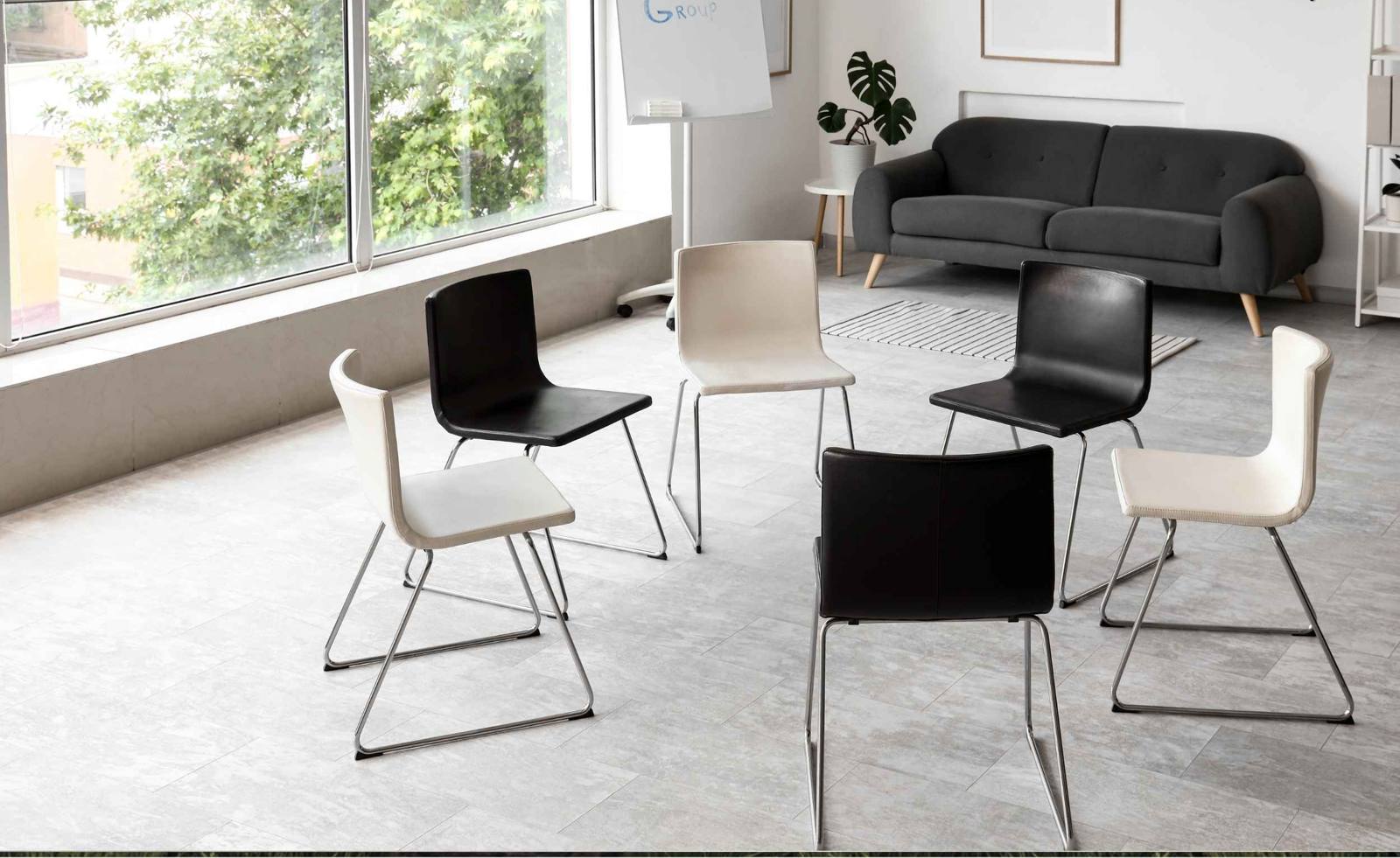
Regular, voluntary group sessions for 8–12 people, where your colleagues leave their job titles, roles and functions at the door and can simply be present as human beings.
The atmosphere Carl Rogers called unconditional positive regard strengthens a basic experience: “I matter; I am valuable and important just as I am.” The group becomes a supportive community of peers that helps people recover emotionally and reconnect with their resources.
“My sessions have shown that compassionate, attentive listening and an intimate space of understanding really can develop in a workplace group, in just an hour and a half.”
- 8–12 people
- 90–120 minutes
- at regular intervals
- in person, at your workplace
- in English or Hungarian
- voluntary participation
- strict confidentiality
Topics: burnout, stress, inner resources, emotions and needs, resilience.
Further services
- One-to-one consultation50 minutes, in person or online
- Leadership consultationconfidential, tailored to the pressures decision-makers face
- Anonymised feedbacktrend-level, for HR and management
- Psychological first aidand professional referral

What participants said
Szentkirályi Magyarország Kft. (group session)
“For me, the most valuable thought was that we are not alone with our problems, and we are strong enough for the challenges ahead.”
“I really liked that it was interactive: we could connect with each other in a different way and relate to each other’s problems and difficulties.”
“It was lovely to connect with the others, to slow down and step out of the everyday.”
“It was good that everyone was honest.”
“We can do anything; it takes courage and faith.”
“Connecting with each other in an unusual way. Seeing new paths and different approaches.”
Quotes translated from Hungarian.

Results within 3–6 months
- Mental strain decreases, which is key to preventing burnout.
- Collaboration improves; company culture and morale grow stronger.
- Trust and loyalty grow.
What it is and what it isn’t
It isn’t organisational development, business coaching or psychotherapy, yet it is just as important a need for a company. Its focus is the person, not the role.
A detailed comparison: The Person Behind the Position (brochure).
Who it’s for
Who needs it most?
Salespeople, account managers, customer service staff, project and service managers, marketers
Accountants, payroll, controlling, HR, legal and procurement staff, engineers, auditors
Managing directors, operations leaders, finance, HR and functional directors
What they go through and how support helps them: The Person Behind the Position (brochure).


Why me?
I know the emotional world of offices
For nearly 20 years I worked at large companies in the technology and service sectors, in engineering and sales roles. I speak the language, and I know the challenges and the priorities. I have been a leader and I have lived through professional and personal crises: I have resigned without a safe next step, and I have been laid off myself.
I have significant first-hand experience of burnout, of the challenges of neurodivergence and of generational differences at work. My approach is humanistic and Rogerian; it works within a mental wellbeing framework, not a clinical one.
A decision guide for HR and leaders
The Person Behind the Position
What do mental health problems cost in Hungary? How is mental wellbeing work different from coaching, psychotherapy and wellbeing programmes? Why aren’t benefits and team-building enough? Who needs support most, and what results can you expect? I have summed it up in a few pages, with five questions to help your decision at the end. Leave your details and I’ll email it to you. No newsletter, no mailing list.

Could this be useful for your company?
In a short, informal 25-minute conversation we can look at how mental wellbeing support could fit the way your company works. Online or in person, with no commitment.
“The curious paradox is that when I accept myself just as I am, then I can change.”